

New Icy Dwarf Planet Candidate Found Far Beyond Pluto
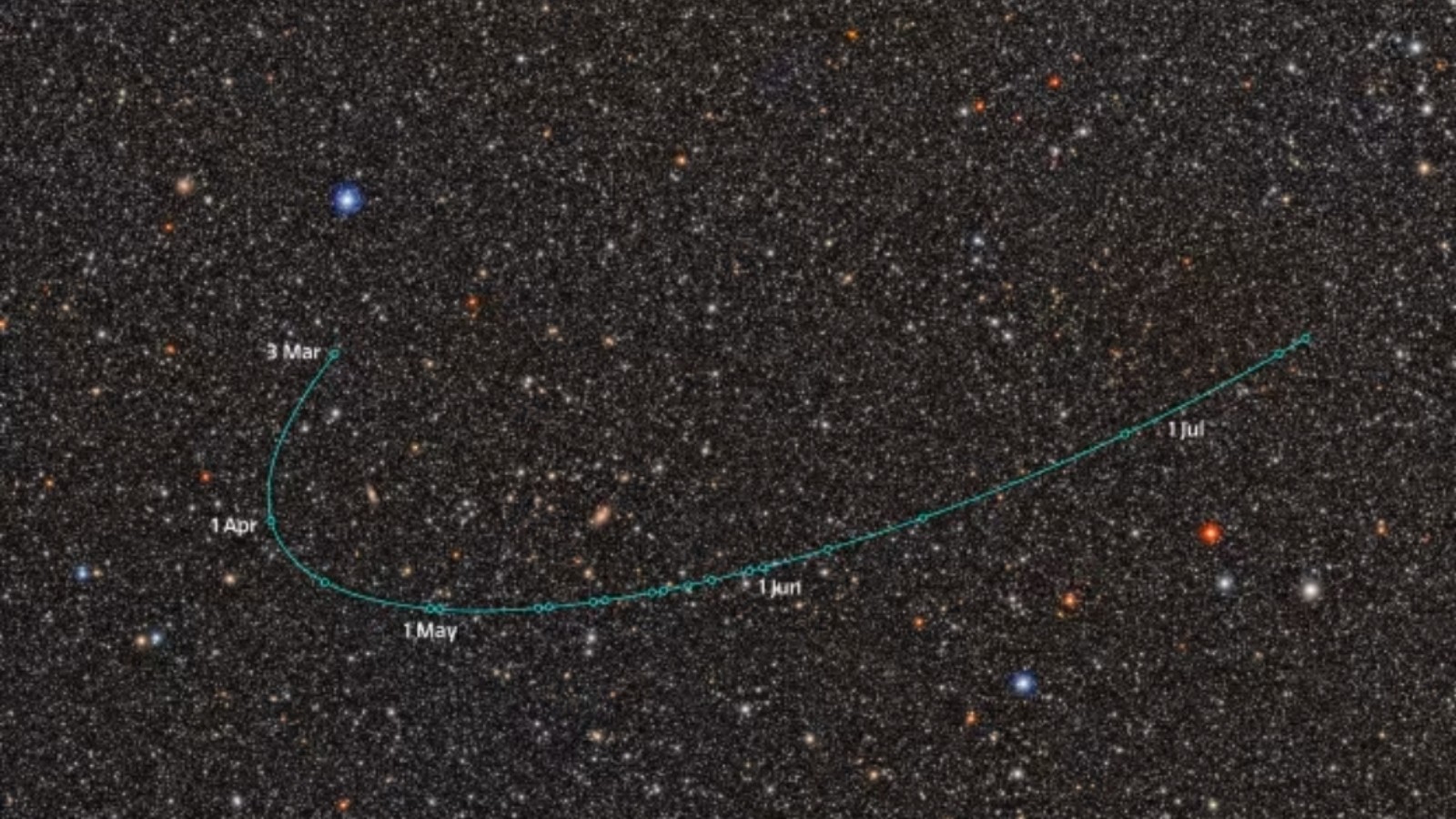
Researchers at Harvard University and the Smithsonian Astrophysical Observatory announced on 6 November 2026 the detection of a very distant icy body with the provisional name 2026 ED138, a new candidate to be a dwarf planet at the edge of the solar system. The body orbits the Sun at a distance of about 85 astronomical units, about 12.7 billion kilometers, more than twice the distance of Pluto from the Sun. Scientists estimated its diameter at about 550 kilometers, a size that places it in the category of possible dwarf planets if its round shape and mass are confirmed. The body was found in data from the DECam survey, a wide field camera on the Victor Blanco telescope in Chile, by tracking a very faint point of light moving very slowly against distant stars. It belongs to the scattered disc region, a region beyond the Kuiper Belt that holds icy bodies in tilted and long orbits. Its surface temperature is extremely low, estimated at about 230 degrees below zero, and its surface likely consists of water ice, methane ice, nitrogen ice, and rock. Scientists need years of additional observation to determine its orbit precisely and confirm its size and shape, before it can be officially classified as a dwarf planet.
The similarity between this body and Pluto, Eris, and Haumea is clear in being a distant icy body orbiting the Sun at the edge of the solar system, in a composition that joins ice and rock, and in reliance on precise optical tracking of its very slow motion. The main difference is distance, as it lies about 85 astronomical units away, far farther than Pluto, which lies about 39 astronomical units away on average, which makes it one of the most distant candidates for dwarf planet classification. The benefit for scientists is large, because detecting a body at this distance tests the power of modern telescopes to capture very faint signals, and adds a new point to the map of distant bodies. What this discovery adds is new material evidence that the edge of the solar system still holds large bodies we have not yet observed. What it changes is the picture of dwarf planet distribution, as it proves that the scattered disc holds new candidates beyond the known Kuiper Belt. The new element here is that one faint point of light in older data was enough to open a new chapter in the study of distant bodies, which shows the precision of measurement and tracking methods in astronomy. This integration of huge distance, large size, extreme cold, and long orbit shows perfect mastery in the order of the solar system and in the diversity of its bodies, and it stands as evidence of the power and majesty of God in creating the universe.